









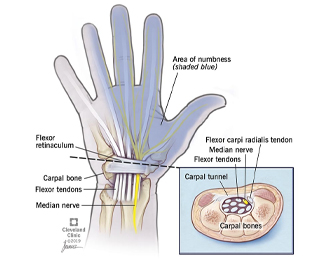
Carpal tunnel syndrome (CTS) is the most common nerve compression condition in the UK, affecting around 1 in 10 people during their lifetime. It causes the tell-tale symptoms of tingling, numbness, and weakness in the hand and fingers — particularly at night. Over 50,000 carpal tunnel release operations are performed on the NHS each year — but many could be avoided with timely, appropriate non-surgical treatment.
What Causes Carpal Tunnel Syndrome?
The carpal tunnel is a narrow passageway in the wrist through which the median nerve passes. When the surrounding tendons become inflamed and swollen — due to repetitive wrist movements, pregnancy, arthritis, diabetes, or hypothyroidism — they compress the median nerve, causing the characteristic symptoms in the thumb, index, middle, and half of the ring finger.
Night-time symptoms (pins and needles that wake you up) and the need to shake the hand to relieve tingling are hallmark features that clinicians use for diagnosis.
The Non-Surgical Treatment Options
1. Wrist Splints
Wearing a neutral-position wrist splint at night prevents the wrist from flexing during sleep, which is when the tunnel is at its narrowest. NICE guidelines recommend splinting as a first-line treatment for mild to moderate CTS and it is effective for many patients.
2. Steroid Injection — The Evidence
When splinting alone is insufficient, a corticosteroid injection directly into the carpal tunnel provides powerful anti-inflammatory relief. A landmark study published in the The Lancet found that steroid injection provided significant improvement in symptoms in up to 80% of patients at one month, and around 50% at 12 months.
Crucially, the study found that an injection can provide meaningful symptom relief for 12–18 months, during which time many patients avoid surgery entirely. For some — particularly those with mild to moderate CTS — a single injection may resolve symptoms long-term.
Why Acting Early Matters
Carpal tunnel syndrome that is left untreated can progress from mild tingling to permanent nerve damage, with loss of grip strength and persistent numbness that may not fully recover even after surgery. Early intervention — a splint, followed by a steroid injection if needed — maximises the chances of full recovery without an operation.
At-Risk Groups in the UK
- Pregnant women (very common in the third trimester — often resolves after birth)
- People with diabetes, rheumatoid arthritis, or hypothyroidism
- Office and computer workers with poor wrist posture
- Manual workers and tradespeople with repetitive hand/wrist movements
- People over 50 — prevalence increases significantly with age
Accessing Treatment Quickly in Norwich
NHS waiting lists for carpal tunnel injections can be long, and by the time of the appointment, symptoms may have worsened significantly. Norfolk Health & Joint Care offers rapid access assessment and injection appointments, allowing patients to be treated promptly — before mild CTS progresses to moderate or severe disease.
One patient treated by Jon Gardner reported: “At least 85% improvement — they are not waking me in the night with pins & needles anymore.”